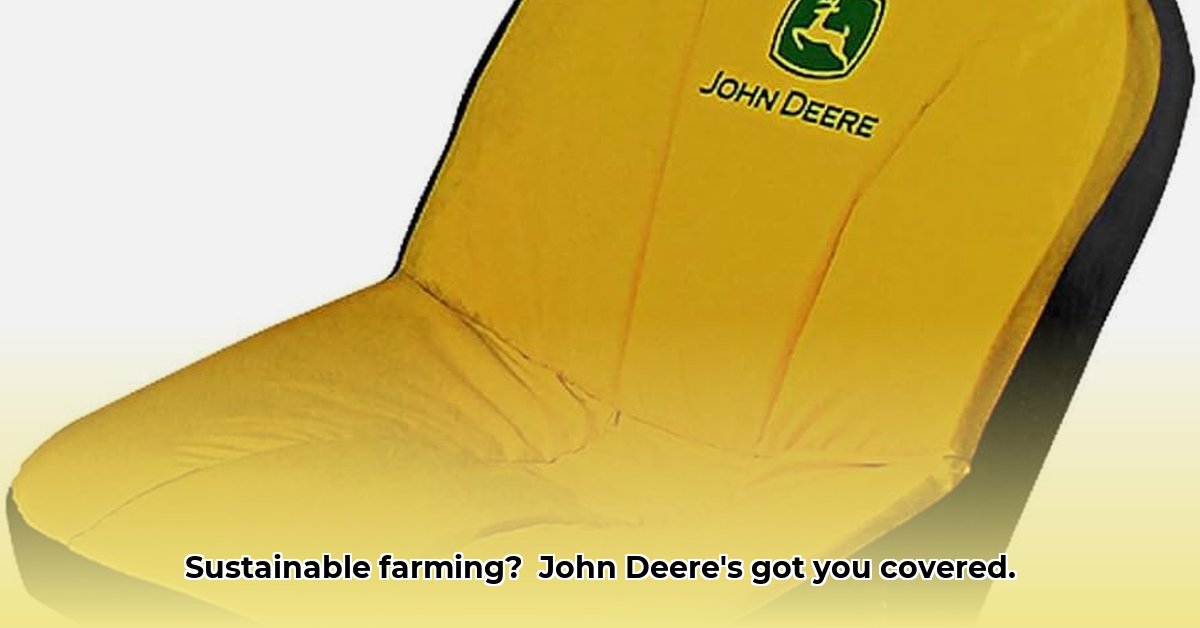
John Deere Tractor Seat Covers: Sustainable Choices for Modern Farming
Spending long hours on a tractor demands comfort, but your seat cover choice also significantly impacts the environment. This article explores the environmental implications of John Deere tractor seat covers (and other brands) and provides actionable steps for making sustainable choices. We'll examine various materials, their lifecycle impacts, and how to select a cover that's both comfortable and environmentally responsible. For information on replacing your tractor seat, check out this helpful resource: tractor seat replacement.
The Environmental Footprint of Tractor Seat Covers: A Deeper Dive
Conventional tractor seat covers, frequently made from petroleum-based plastics, contribute significantly to greenhouse gas emissions and landfill waste. These materials have a substantial carbon footprint throughout their lifecycle, from production to disposal. However, sustainable alternatives are increasingly available.
Dr. Emily Carter, Professor of Chemical and Biomolecular Engineering at Princeton University, notes, "The environmental impact of material choices extends beyond just the manufacturing process; we must consider the entire lifecycle, including disposal and potential for recycling or biodegradation." This highlights the need for a holistic approach to selecting sustainable seat covers.
Sustainable Seat Cover Materials: A Comparative Analysis
Fortunately, eco-friendly options are emerging. Recycled polyester offers a durable, relatively affordable alternative, minimizing the demand for virgin resources. However, organic cotton and hemp, while biodegradable, require careful consideration of water usage and pesticide application. Bio-based plastics represent a promising but still developing area, with their long-term environmental impact still under investigation.
| Material | Pros | Cons |
|---|---|---|
| Recycled Polyester | Reduced environmental impact, durable, affordable, readily available | May not be as breathable as natural fibers; durability varies based on quality. |
| Organic Cotton | Breathable, comfortable, biodegradable | Higher water and pesticide requirements; less durable than synthetics. |
| Hemp | Durable, lower water needs than cotton, biodegradable | Can be more expensive; may not be as soft as cotton. |
| Bio-based Plastics | Made from renewable resources, potential for biodegradability | Relatively new technology; long-term durability and environmental impact require further study. |
Choosing the best material requires careful consideration of your priorities and budget. Many experts emphasize a trade-off between cost, durability, and environmental impact.
Making Sustainable Choices: A Practical Guide
Selecting a sustainable John Deere tractor seat cover involves a multi-step process:
Research Material Composition: Examine the manufacturer's information for details on the seat cover's material composition and its sustainability claims. Look for percentages of recycled content.
Seek Certifications: Look for certifications like GOTS (Global Organic Textile Standard) or others verifying recycled content and sustainable manufacturing practices. These provide assurance of environmentally responsible production.
Prioritize Durability: A long-lasting seat cover reduces waste in the long run, offsetting potentially higher initial costs. Higher denier ratings indicate greater durability.
Consider End-of-Life Management: Check the manufacturer's information on recyclability or appropriate disposal methods. This minimizes the overall environmental impact.
Support Responsible Manufacturers: Choose companies committed to transparency in their manufacturing processes and environmental impact reduction.
These steps empower you to make informed decisions aligned with your values and contribute to a greener agricultural future.
Expanding Your Sustainable Practices: Beyond the Seat Cover
Choosing a sustainable seat cover is just one step toward broader sustainable farming practices. Sustainable farming practices encompass a range of elements including responsible fertilizer use, efficient water management, and soil conservation techniques. Every conscious choice contributes to a more environmentally responsible approach to agriculture.
Extending Tractor Seat Lifespan: A Key Element of Sustainable Farming
Key Takeaways:
- A durable, well-fitting seat cover significantly extends the life of your tractor seat.
- Higher-quality, specialized covers offer superior protection and durability.
- Universal-fit covers often provide inadequate protection and may tear easily.
- Material quality directly impacts the cover's lifespan and cost-effectiveness.
- A standardized warranty structure for tractor seat covers would benefit both consumers and the environment.
The durability of your tractor seat cover directly impacts both your financial investment and the environmental footprint of your farming operation. Replacing worn-out tractor seats is expensive and generates unnecessary waste. A high-quality, durable seat cover acts as preventative maintenance, extending the useful life of your valuable equipment. Isn't it time you considered this critical piece of sustainable farming?